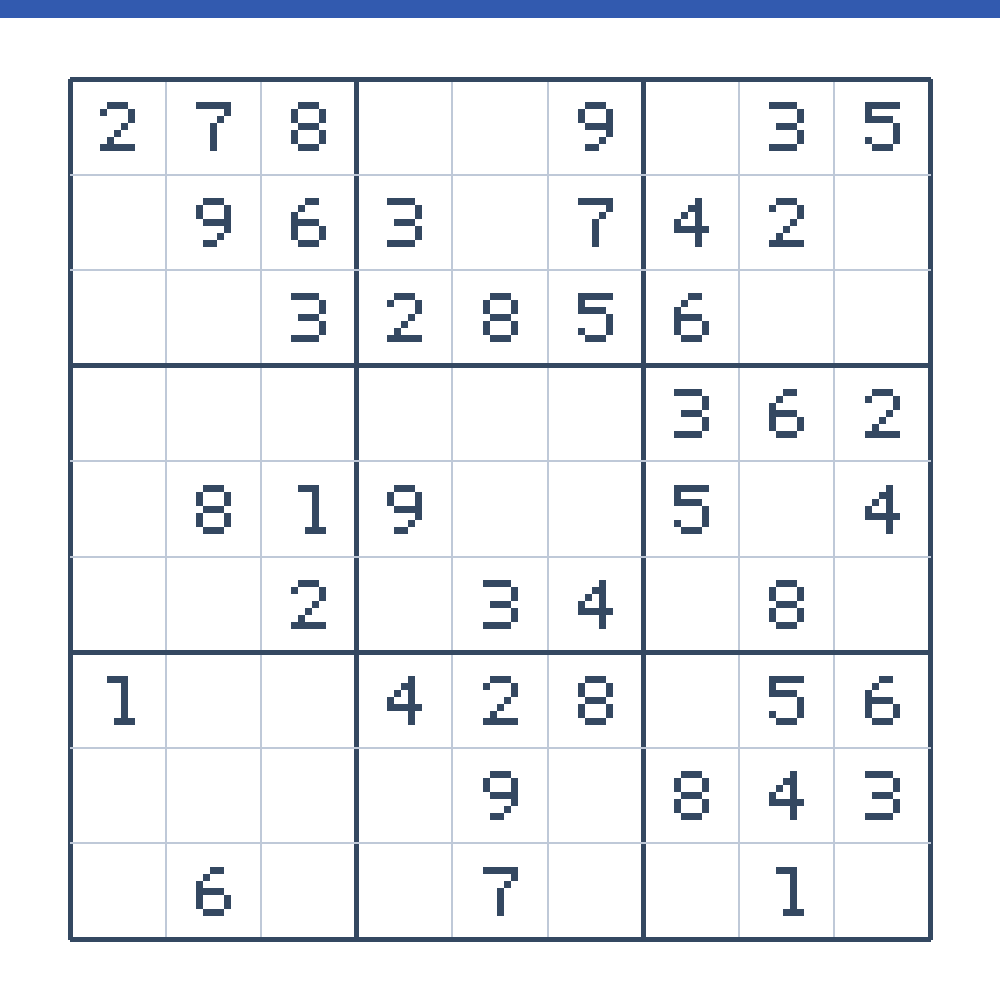
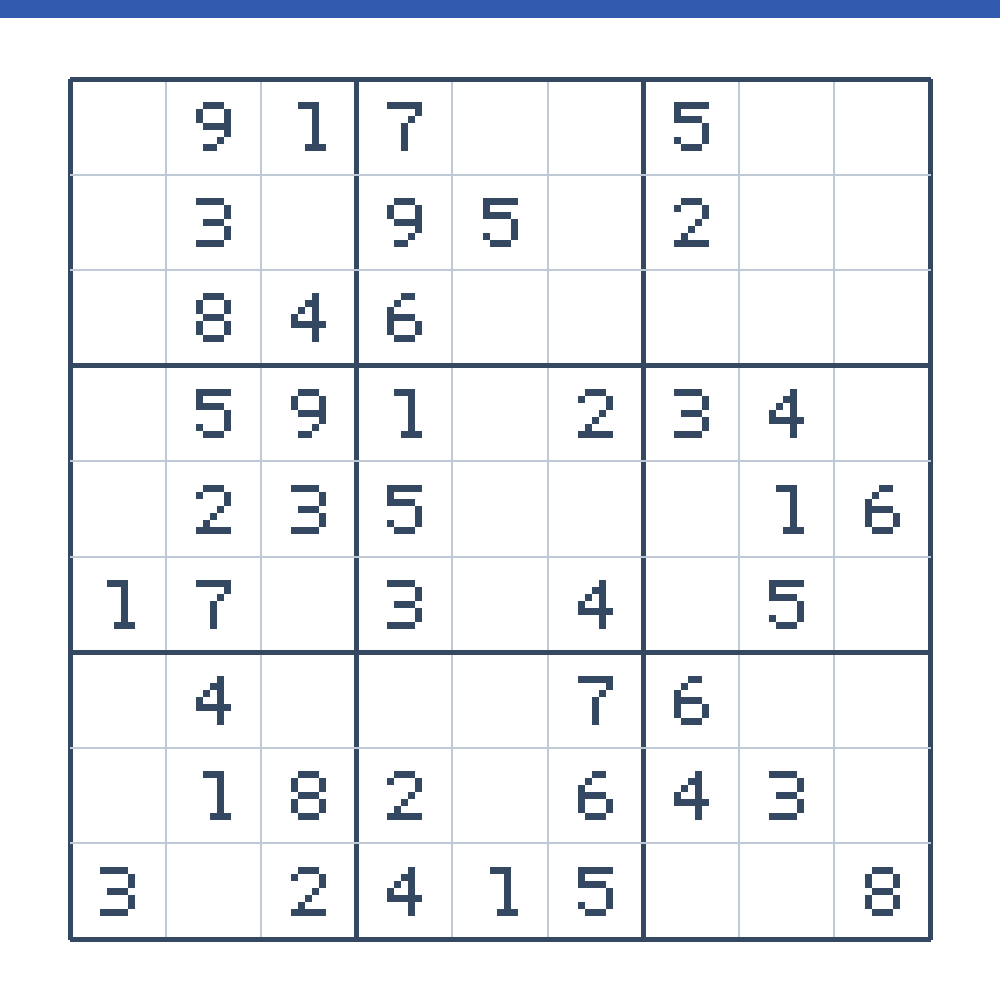
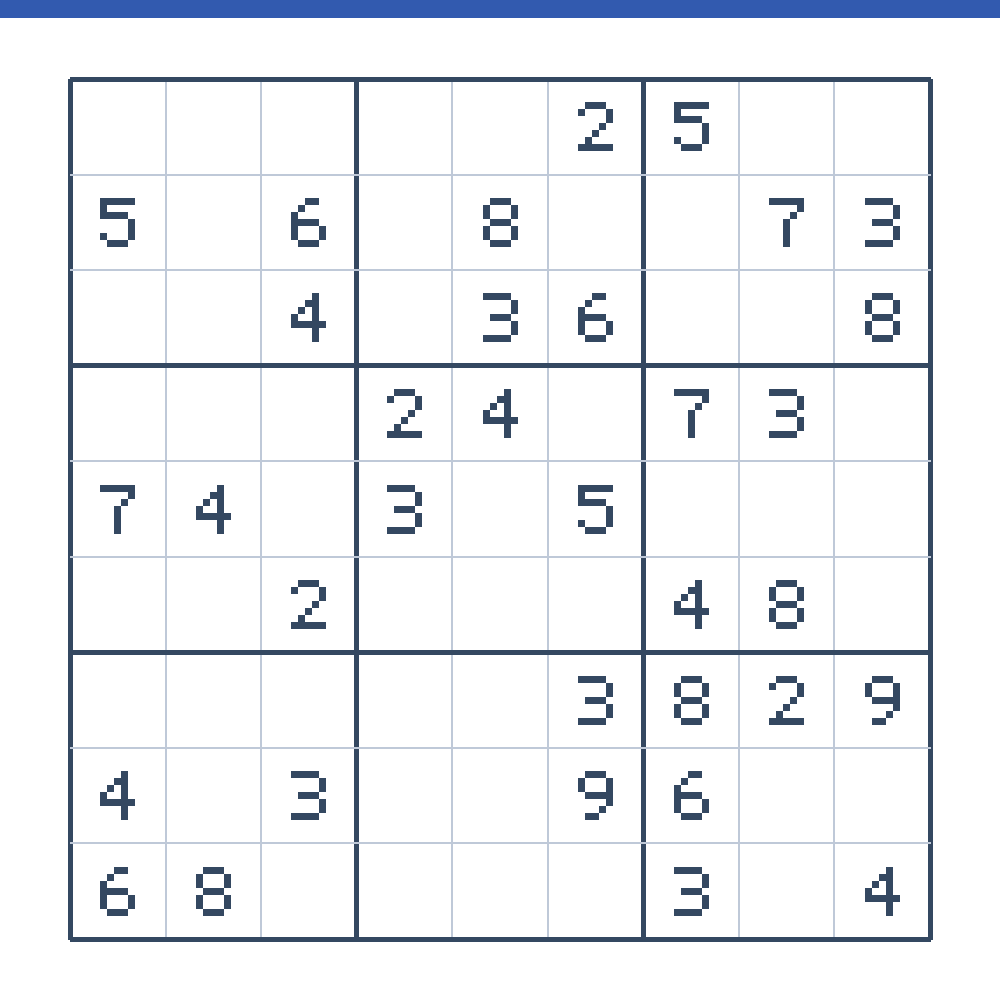
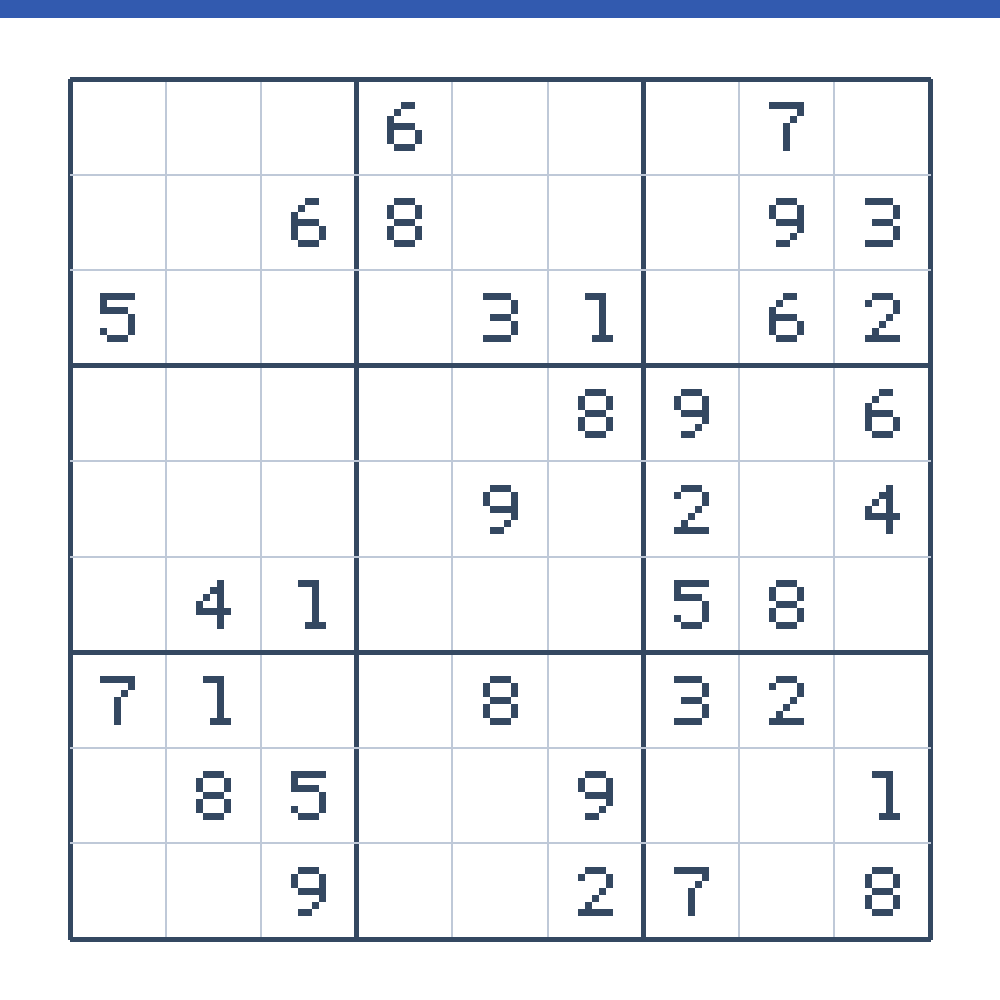
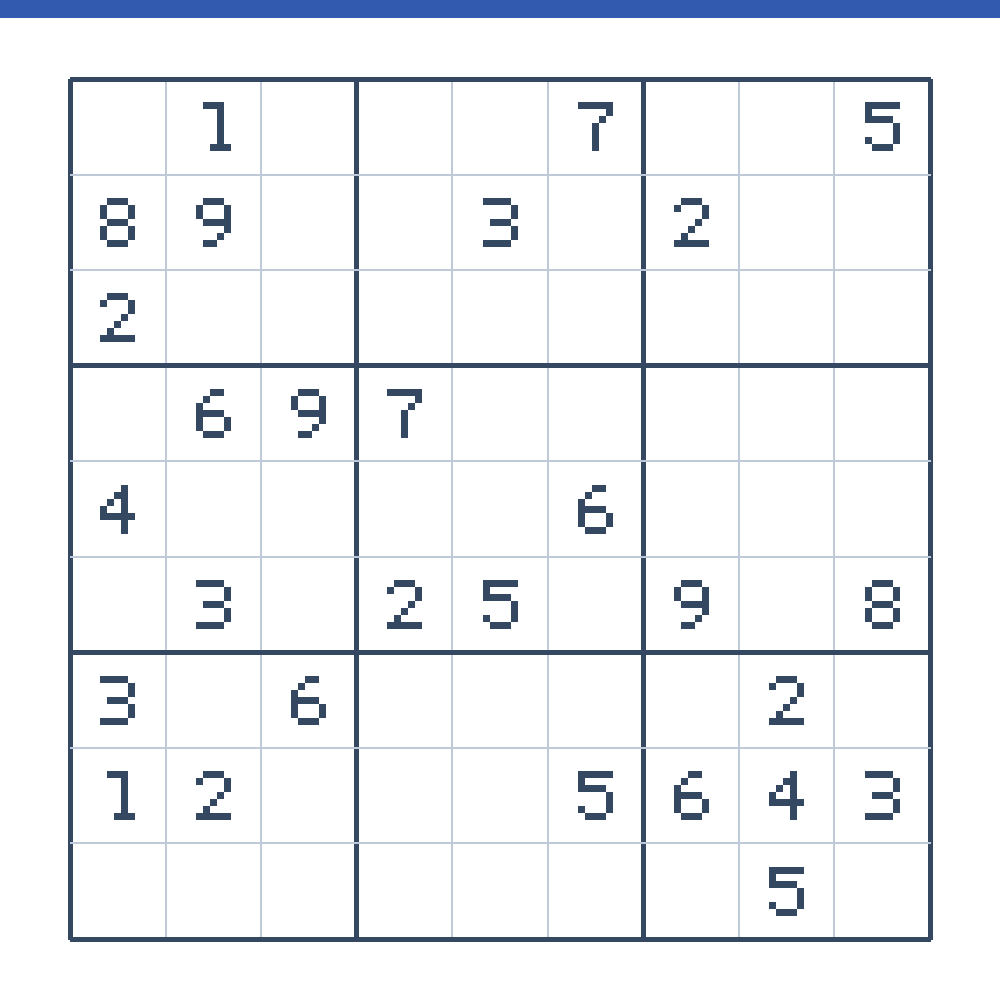
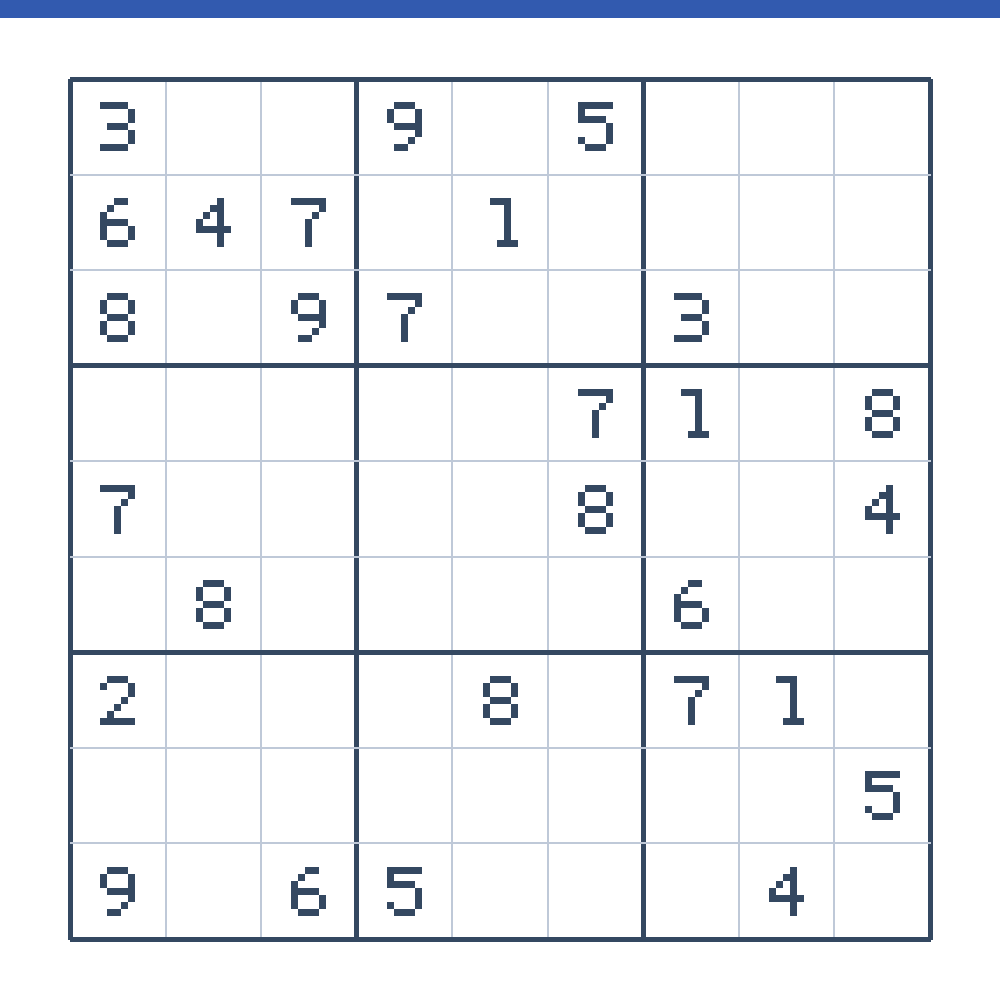
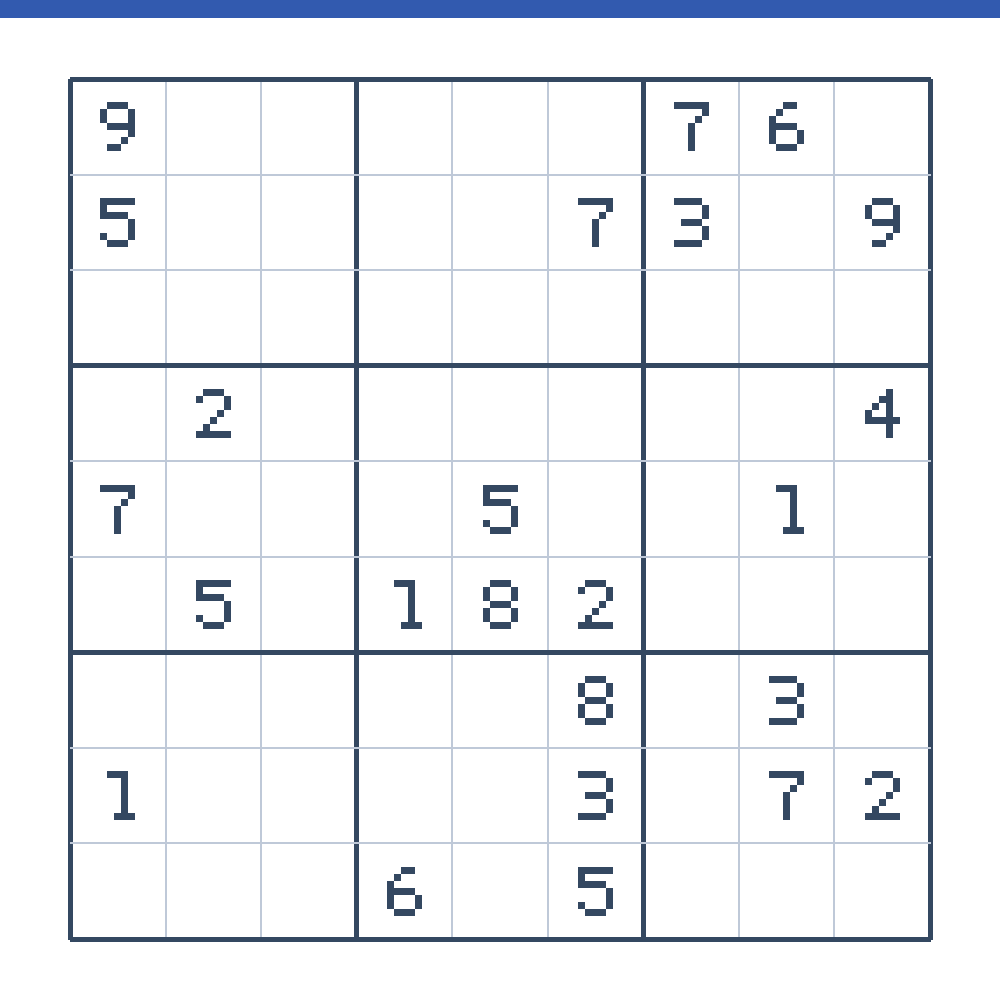
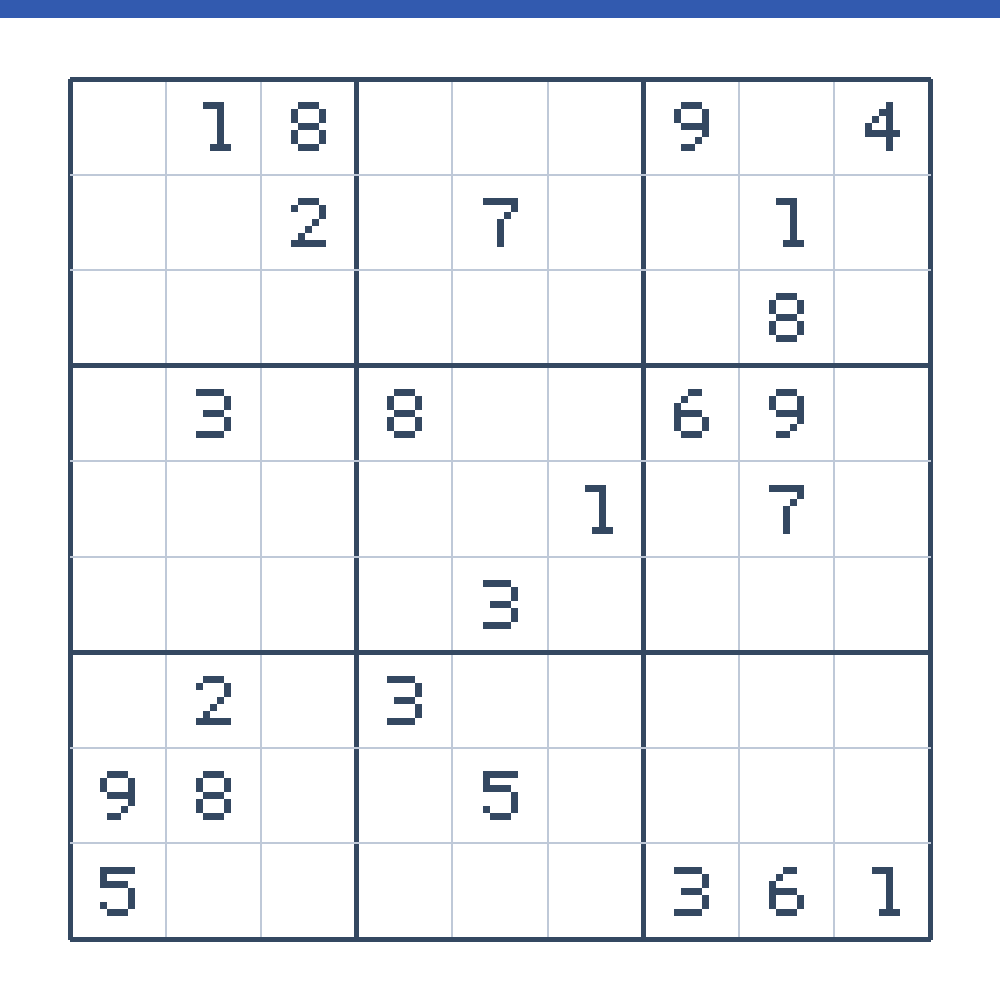
Free printable Sudoku puzzles, two ways: generated in your browser the moment you ask for them, or downloaded as a ready-made PDF with an answer key. No sign-up, no watermark across the middle of the grid, and nothing to install either way.
Preparing your sheet…
Ready-made PDF sets
Each file holds eight puzzles, four to a page, followed by the answers. They are fixed sets rather than freshly generated ones, which is the point of them: the link keeps working, and an answer key printed today still matches a puzzle sheet printed next year. Nothing needs to be installed and there is no sign-up — the link is the file.
Easy Sudoku — Set 18 puzzles · 4 pages · PDFAround 42 clues. Solvable by scanning alone — a good place to start.
Easy Sudoku — Set 28 puzzles · 4 pages · PDFAround 42 clues. Solvable by scanning alone — a good place to start.
Medium Sudoku — Set 18 puzzles · 4 pages · PDFAround 34 clues. Needs hidden singles: the digit with one home left in a unit.
Medium Sudoku — Set 28 puzzles · 4 pages · PDFAround 34 clues. Needs hidden singles: the digit with one home left in a unit.
Hard Sudoku — Set 18 puzzles · 4 pages · PDFAround 28 clues. A third need a naked pair or a box/line elimination.
Hard Sudoku — Set 28 puzzles · 4 pages · PDFAround 28 clues. A third need a naked pair or a box/line elimination.
Expert Sudoku — Set 18 puzzles · 4 pages · PDFAround 24 clues. Five in six need an elimination technique; none needs a guess.
Expert Sudoku — Set 28 puzzles · 4 pages · PDFAround 24 clues. Five in six need an elimination technique; none needs a guess.
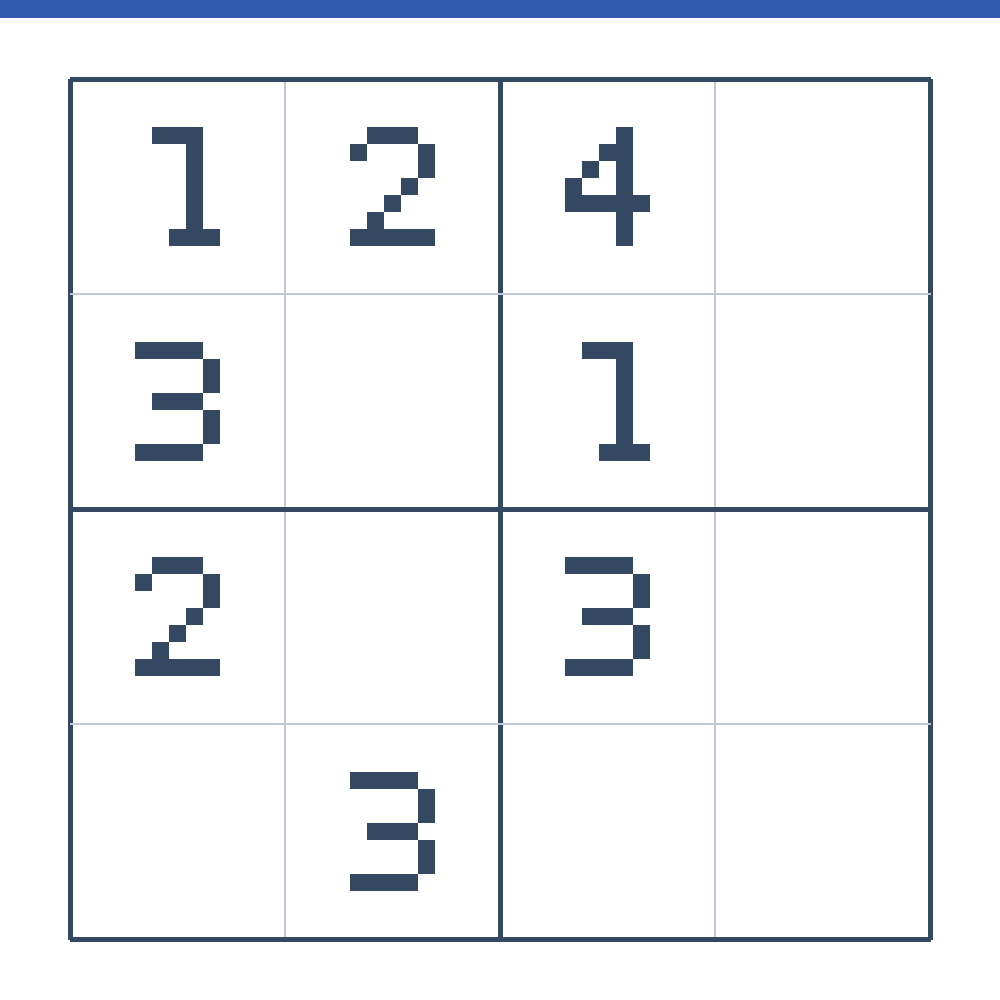
Sudoku for Kids — 4×48 puzzles · 4 pages · PDFDigits 1 to 4, one of each per row, column and box.
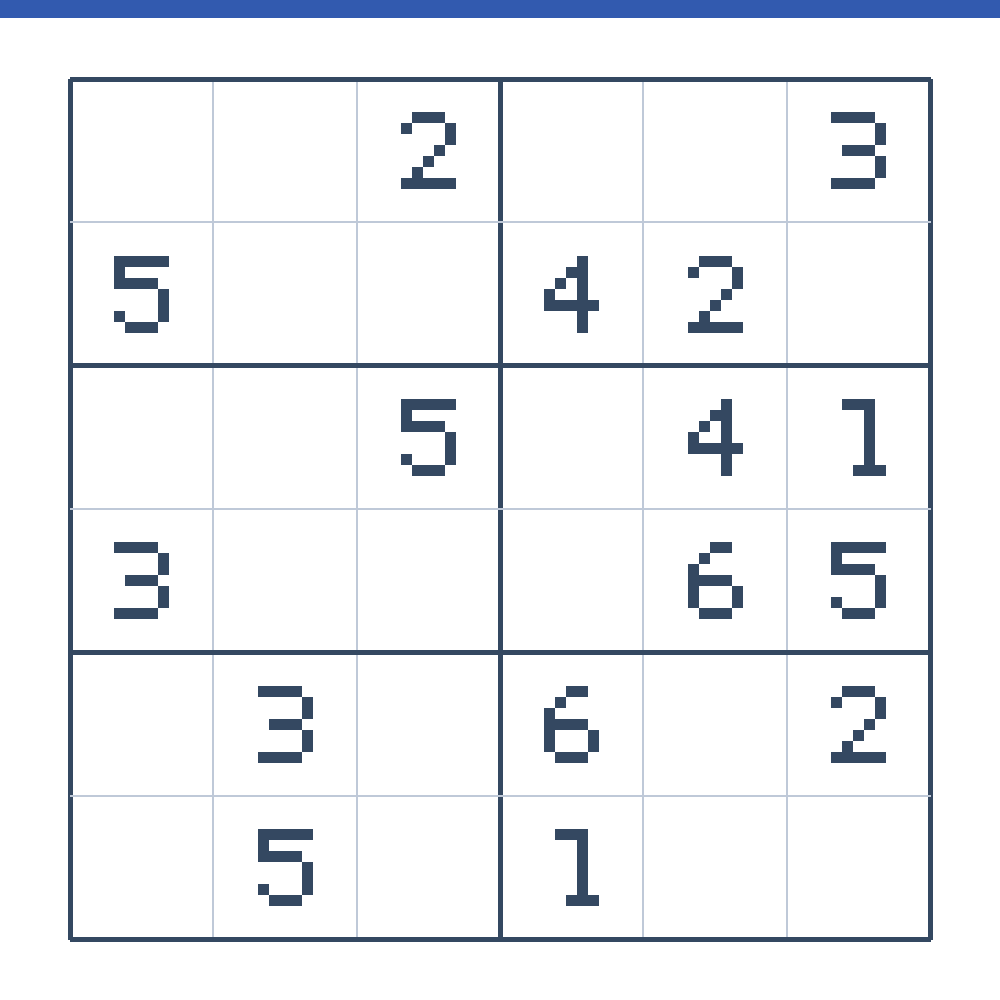
Sudoku for Kids — 6×68 puzzles · 4 pages · PDFDigits 1 to 6, one of each per row, column and box.
Want a set nobody else has, or a different number to a page? Use the generator at the top of this page instead — it makes a fresh sheet every time you press New puzzles.
How to print them
Choose your options above and press Print. The site's header, footer and everything else on this page drop away automatically — the printed sheet carries the grids and nothing else, so you are not spending ink on navigation.
If your browser adds its own header and footer with the page URL and date, turn off "Headers and footers" in the print dialog's options. Portrait orientation and any normal margin setting will fit the grids comfortably.
Smaller grids for children
The Grid size menu also prints 4×4 and 6×6 puzzles — the same small boards as the Sudoku for kids page, on paper. A 4×4 uses the digits 1 to 4 and a 6×6 uses 1 to 6, so a child can finish one without needing to scan a nine-wide row. Those two sizes have one setting each rather than four levels, which is why the difficulty menu greys out when you pick them.
Six 4×4 grids to a page is a sensible classroom sheet; for a 6×6, four to a page keeps the squares big enough for a young hand to write in.
Choosing a level
The clue count printed under each grid tells you roughly what you are in for, and the four levels here mean the same as they do on the playable boards:
Easy — around 42 clues, solvable by scanning alone. The right choice for children, for a beginner, or for a puzzle on a coffee break.
Medium — around 34 clues. Scanning runs out and you will need hidden singles.
Hard — around 28 clues. Scanning stalls, and a third of these sheets hold a grid needing a naked pair or a box/line elimination.
Expert — around 24 clues, and five in six need an elimination technique. Bring a sharp pencil.
Every grid on every sheet is checked before it is printed: a solver that uses only the techniques taught on this site has to finish it, with no guessing anywhere. A printed puzzle gives you nothing to check against, so a grid that secretly needs a guess wastes an afternoon — these cannot.
Printing four or six to a page shrinks the grids, which matters more than it sounds: hard and expert puzzles need room for pencil marks in every square. For those two levels, one or two per page is the practical choice.
Every sheet is different
These are generated when you ask for them, not picked from a fixed library, so pressing New puzzles gives you a set nobody else has. Each grid is checked for a unique solution before it is shown — the same guarantee the on-screen game makes — so a printed puzzle never dead-ends and never needs a guess.
Prefer to solve on a screen, with notes, undo and a timer? Play easy, medium, hard or expert instead. New to Sudoku? Start with how to play, then come back and print a few once the rules have stuck.